Shared augmented reality / Conservation storytelling
Critical Distance
What if we could experience the ocean through an orca's eyes?
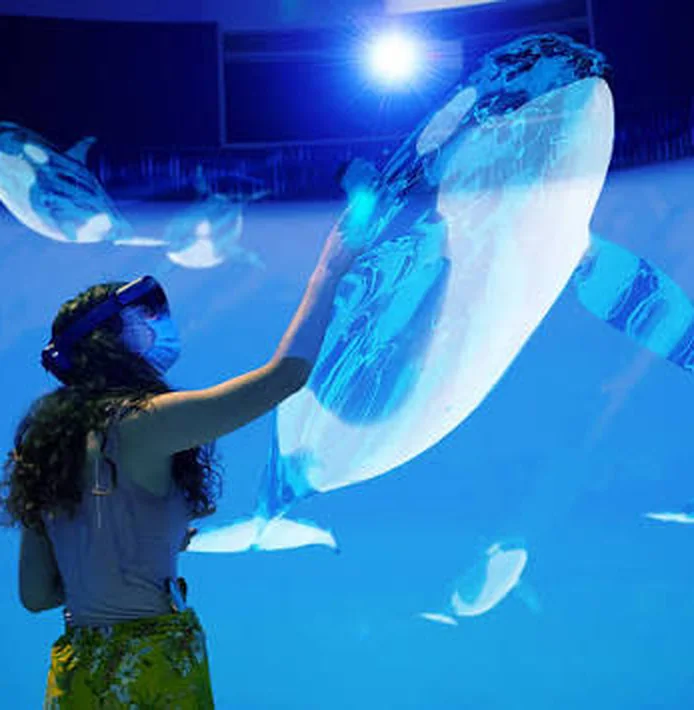
In the Salish Sea, a young Southern Resident orca named Kiki is growing up in a family whose future is uncertain. Her J Pod depends on sound to find food, navigate, and stay connected. But the waters they call home are increasingly shaped by human activity.
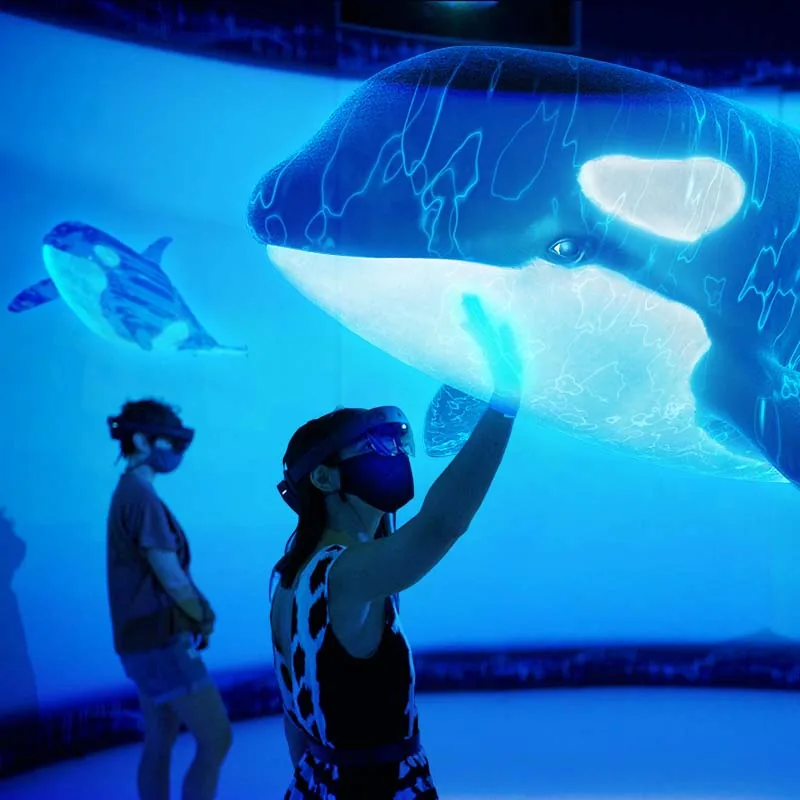
Critical Distance invites people into that world, not as distant observers, but as visitors sharing space with Kiki and her family. The hope was simple: that getting closer to their experience might change how we understand our own place in it.
Making the invisible visible
To see their world, we had to hear it.
For an orca, sound is a way of seeing, finding family, and surviving.
It's difficult to grasp what underwater noise means to an animal whose life depends on echolocation. Facts and diagrams can explain the problem, but they cannot always make us feel it.
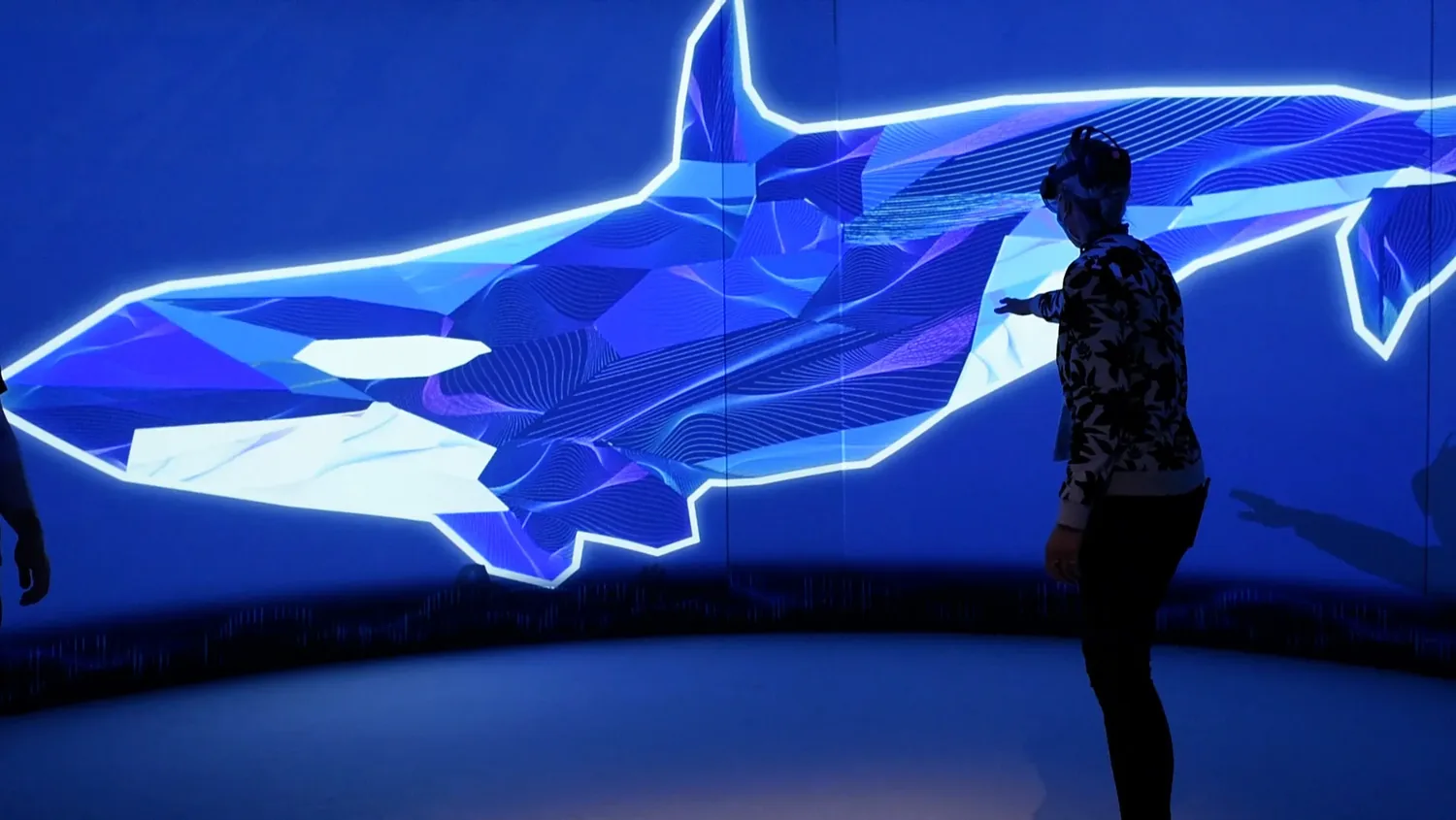
Critical Distance turns sound into something audiences can see and move through. Together, visitors encounter Kiki and J Pod and experience how the noise of vessels can interrupt the signals that connect them. Shared augmented reality mattered because the encounter could be experienced with other people, opening the door to conversation as well as wonder.
The collaboration
Building an experience worth sharing.
The most interesting part wasn't the technology. It was what the technology made possible.
Adam May and the remarkable team at Vision3 created the experience in collaboration with Unity, Microsoft's immersive technology team, and Passion Pictures. As creative lead for Vulcan Productions, I worked closely with Adam May throughout the development of Critical Distance, shaping the story, visuals, and interactivity together. I was involved in every cut and review of the experience, with final approval over the creative work and assets. It was a collaboration built on constant conversation about what visitors should see, feel, and understand.
What drew me to the project was the possibility of moving beyond explaining an environmental problem. We could invite people to inhabit another perspective, together, and then give that feeling somewhere to go. The experience became a starting point for conversations about the choices that affect the whales' survival.
See the experience
The long life of a story
The story keeps going. So does its impact.
An innovative experience can have a much longer life than the technology that first brought it into the world. Critical Distance premiered in 2021, then continued traveling through museums and cultural institutions across North America and Europe, adapting as the ways people experience it evolved.
Along the way, conservation partners helped turn the encounter into questions, conversations with experts, and opportunities to better understand the choices affecting Southern Resident orcas. In October 2026, Kiki’s story arrived at The Whale Museum in Friday Harbor, near the waters she and J Pod call home.
That longevity is the lesson I carry from this work. An unexpected way of telling a story can keep reaching people long after a conventional film or digital project might have disappeared from view. Years after launch, Kiki is still inviting people to see her world differently and giving them a reason to care about what happens next.