Audience first
Start with the audience
What do people need to understand, and where will they encounter the story? Let those answers shape the format, not the other way around.


Editorial leadership / Digital strategy / Organizational change
When I arrived at Pew, the organization was producing good work. Its research was exceptional, its digital presence was solid, and its creative teams were making strong videos, graphics, and stories. But too much happened in isolation. Each piece had value, but we weren't connecting them into something larger.
The challenge wasn't talent or ambition. It was the workflow. Creative teams were often brought in late, responding to requests rather than helping shape stories from the beginning. Traditional media coverage remained a priority, even as audiences were discovering and consuming information in new ways.
There was real hunger for change. Program teams wanted to reach younger audiences and tell more compelling stories. Creative teams wanted to collaborate and experiment. The ingredients were there. We needed to connect them.
The idea behind Connected Stories was to bring creative teams out of their individual silos and into closer collaboration with one another and with program teams, earlier in the process. Instead of starting with predetermined deliverables, we started with audience needs, research, and opportunities. The goal was a more proactive, collaborative approach where every piece could stand on its own while adding something new to a larger story.
Changing how the work begins
I developed a model that connected editorial, digital, multimedia, design, and program expertise earlier, with a shared editorial calendar and recurring story formats. Rather than rebuilding the process for every announcement, teams could plan around themes and audience journeys while still meeting the specific needs of each research program.
Audience first
What do people need to understand, and where will they encounter the story? Let those answers shape the format, not the other way around.
One creative team
Bring the people who write, design, film, edit, and distribute into the same conversation before the work is defined.
A connected experience
Give each story a life of its own, but connect the pieces across social, audio, video, newsletters, and Pew.org so the audience can keep going.
Where the idea became tangible
We weren't starting from zero. We began with practical experiments that let people work together differently, connecting editorial, digital, audio, video, design, and program expertise around a shared story rather than a single deliverable.
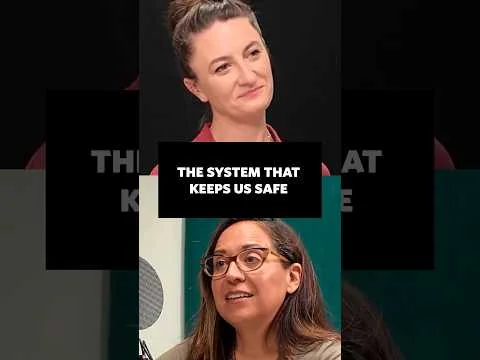
With After the Fact, a cross-functional team reimagined the podcast as a recurring, multi-format storytelling product. The work became a proving ground for shared decisions, field reporting, and the habit of looking beyond individual job descriptions to find the strongest ways to reach an audience.
Our LinkedIn thought leadership work brought research and individual expertise into a more coordinated, ongoing conversation. Instead of treating every post as a separate announcement, teams began thinking about the voices, formats, and connections that could sustain interest over time.
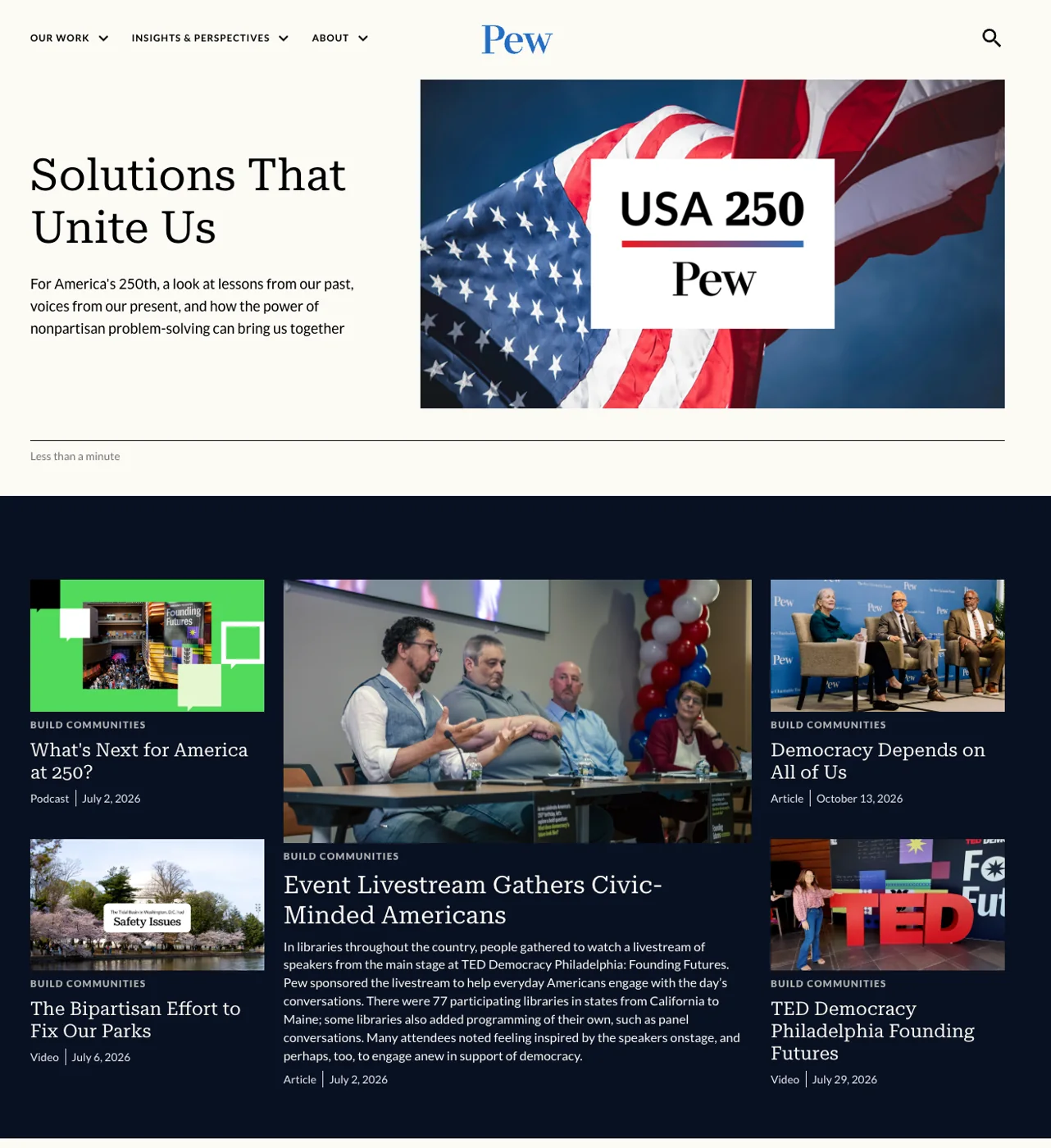
America 250 gave that approach another opportunity to grow. Research programs and creative disciplines could come together around themes of history, civic life, and lived experience, developing stories that stood on their own while contributing to something larger.
What the work showed
The evolution toward more connected production and audience experiences is ongoing. But experiments like After the Fact, our LinkedIn thought leadership work, and the America 250 initiatives demonstrated what was possible when teams began thinking beyond their individual disciplines and working toward a shared story.
This wasn't a finished transformation. It was a practical framework, a set of experiments, and growing evidence that Pew could make more of the extraordinary talent and research it already had.